
Home » Posts tagged 'sustainability'
Tag Archives: sustainability
What’s Happening at the North Amherst Community Farm
What’s Happening at the North Amherst Community Farm
by Scott Merzbach August 3, 2026

AMHERST — On roughly 20 acres of arable land and in three greenhouses at the North Amherst Community Farm, squash, peppers, tomatoes and flowers are growing and being harvested this year — signs of recovery after two fallow seasons.
The farmhouse, once home to apprentice farmers for Simple Gifts Farm, which leased the 1089 North Pleasant St. property, has also returned to use. It’s been converted into a duplex rented to local college students, adding revenue on top of the farmland leases.
Elsewhere on the site, 20 to 30 volunteers have cleared debris and maintained the public trails, allowing visitors to again walk between and along the edges of the crops.
“This is developing some kind of holding pattern that allows us not to sink under the onslaught of nature,” said Bruce Coldham, president of the board. Some of the farmland was put back into use in 2025, he said, after two seasons with no new crops planted and only limited use of the land.
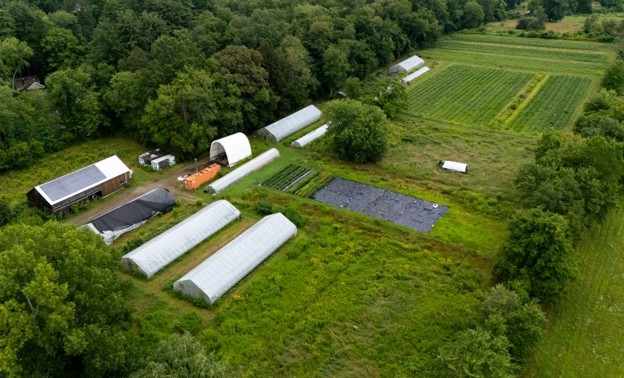
The North Amherst Community Farm on Friday, July 31. The farm is making a comeback this year, two years after Simple Gift Farms walked away from a 50-year lease on the land, DANIEL JACOBI II / Staff Photo
That “good holding pattern,” as Coldham puts it, is bringing in enough income to cover the farm’s taxes and insurance. It comes after the farm board regained control of the site through a so-called leaseback arrangement with Simple Gifts Farm, which shut down operations in March 2024 — 17 years into a 50-year lease. That was when the farm stand store, which sold organic produce and pasture-raised meats and eggs, closed.
The new revenue will also help move the farm toward a debt settlement. Simple Gifts Farm carries significant debt from loans, including one from the U.S. Department of Agriculture’s Farm Service Agency, which allowed owners Jeremy Barker-Plotkin and David Tepfer to improve the site — adding greenhouses, hoop houses, caterpillar tunnels and barns, renovating the farmhouse, installing a modern irrigation system and building the year-round store.
“We’re committed to helping the lessee get out of their debts,” Coldham said.
But despite a conversation with the Farm Service Agency 15 months ago, there has been no action on clearing that debt, though Coldham said he anticipates a settlement at some point.
“We need to clear the debt obligation in order for us to resolve any commitments to anyone in the future,” he said.

A greenhouse at the North Amherst Community Farm, Friday, July 31, 2026. DANIEL JACOBI II / Staff Photo
The North Amherst Community Farm bought the site, formerly the Dziekanowski Farm, in 2006 for $1.2 million, preventing it from becoming an upscale housing development.
A single vegetable farm, or something similar to what existed before, may no longer be feasible, Coldham said. Instead, the board is looking to bring more people onto the land — possibly through a second community garden, public orchards, or space for farmers to operate on small plots.
This year, three area farms are using the land under sublease arrangements.
Kitchen Garden Farm, of Sunderland, is using Greenhouses 1, 2 and 3 off North Pleasant Street to grow peppers and tomatoes, after previously growing leafy greens there. The farm is also growing 4 acres of tomatoes and peppers with drip irrigation and plastic mulch in the fields just north of the greenhouses.
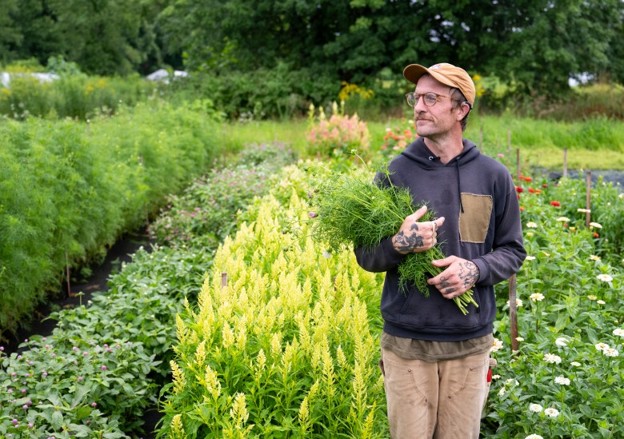
Em Thomas, of Little Bend Flower Farm, on his plot at the North Amherst Community Farm in Amherst, Monday, Aug. 3, 2026. DANIEL JACOBI II / Staff Photo
Em Thomas, of Little Bend Flower Farm in Sunderland, is growing flowers on about half an acre just north of the large greenhouse on the west end of the farm.
Plainville Farm, of Hadley, run by Wally Czajkowski, is growing squash in the fields at the east end of the farm, along Pine Street.
Elsewhere on the site, contractors have taken down barns and improved the entrance, and the trails are being kept open through the purchase of an electric mower.
In the spring, students from the Stockbridge School at the University of Massachusetts, taking part in an agricultural permaculture design and practice class, provided a vision for the future of the farm. Coldham said this will help with the thought process moving forward.
While the traditional annual farm festivals are not yet running again and the farm store remains mostly closed, Coldham said there are ideas for how it could be used for direct sales to consumers.

What’s growing on the farm this spring?
What’s growing on the farm this spring?
The North Amherst Community Farm is coming back to life. Following 17 years of organic farming and a short interval of inactivity, the board of directors is working to revive farming activity in North Amherst with an emphasis on the “community” aspects of the North Amherst Community Farm. Toward this end, we engaged the young, creative and passionate minds of UMass students through the Stockbridge School of Agriculture Permaculture Design and Practice class this past spring. They presented the result of their work to community members on May 7, 2026 at the North Amherst Public Library.
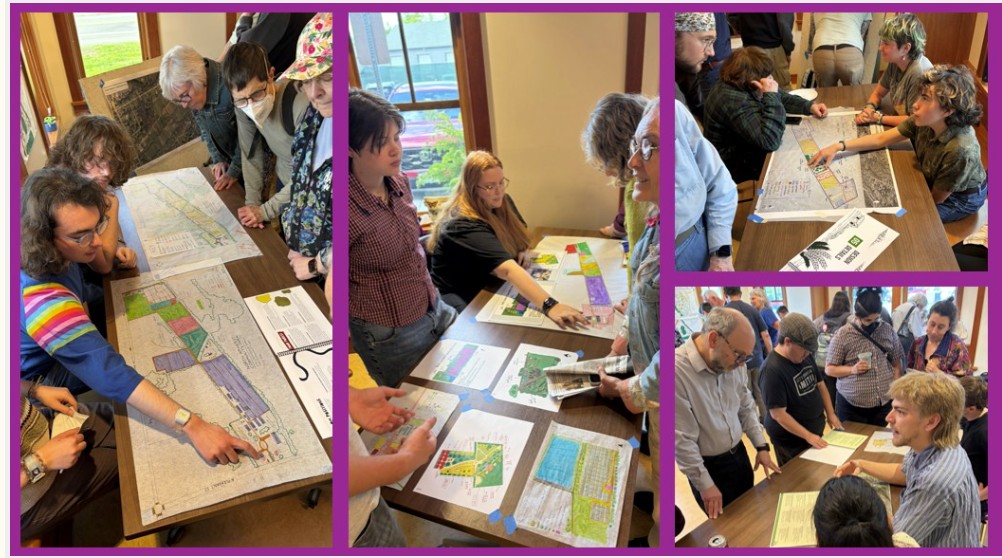
The NACF board of trustees will be reviewing the suggestions of the students and community members over the next few months.
Friends of the farm continue to clean up the vegetation and debris while also working to stabilize the financial status of the farm and move toward full ownership of the infrastructure (buildings, equipment, etc.) that is currently owned by Simple Gifts.
In the meantime, we have rented most of the farmland in order to pay taxes and insurance, which allows the public continued access to the property. We’re delighted to have responsible tenant farmers using and maintaining the land.
If you walk the farm this spring, you will see:
Kitchen Garden Farm from Sunderland occupying the large greenhouses. Greenhouses 1, 2, and 3 on the west end (North Pleasant St.) have been the home to leafy green vegetables over the winter and are now being transitioned into peppers and tomatoes.
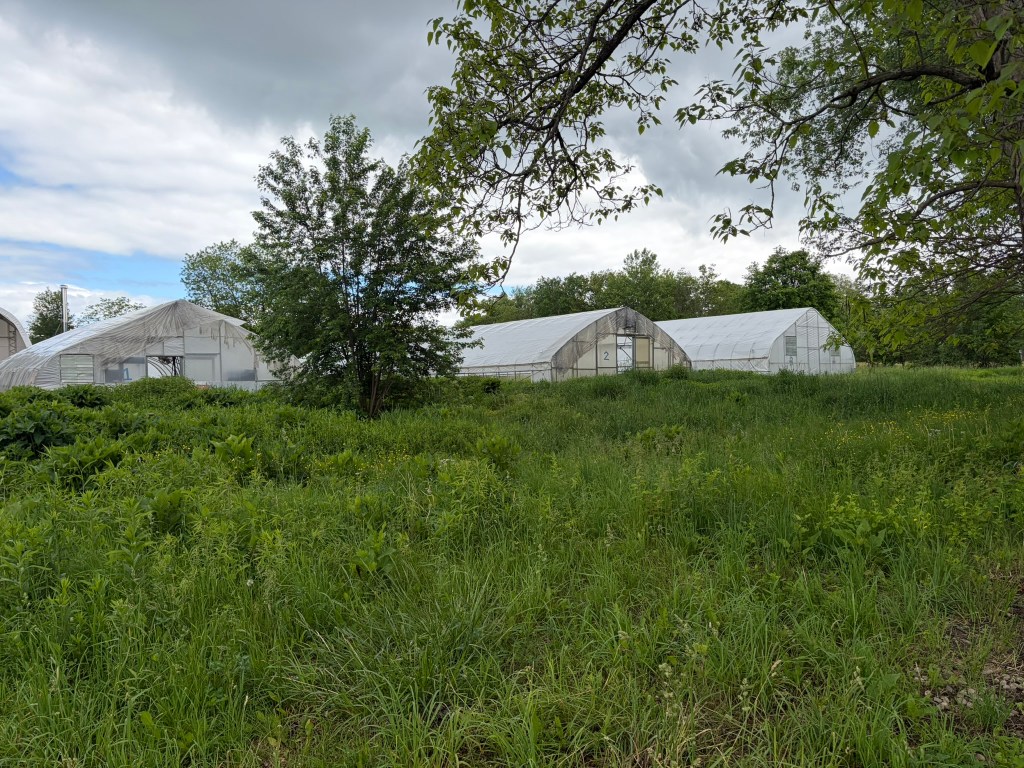
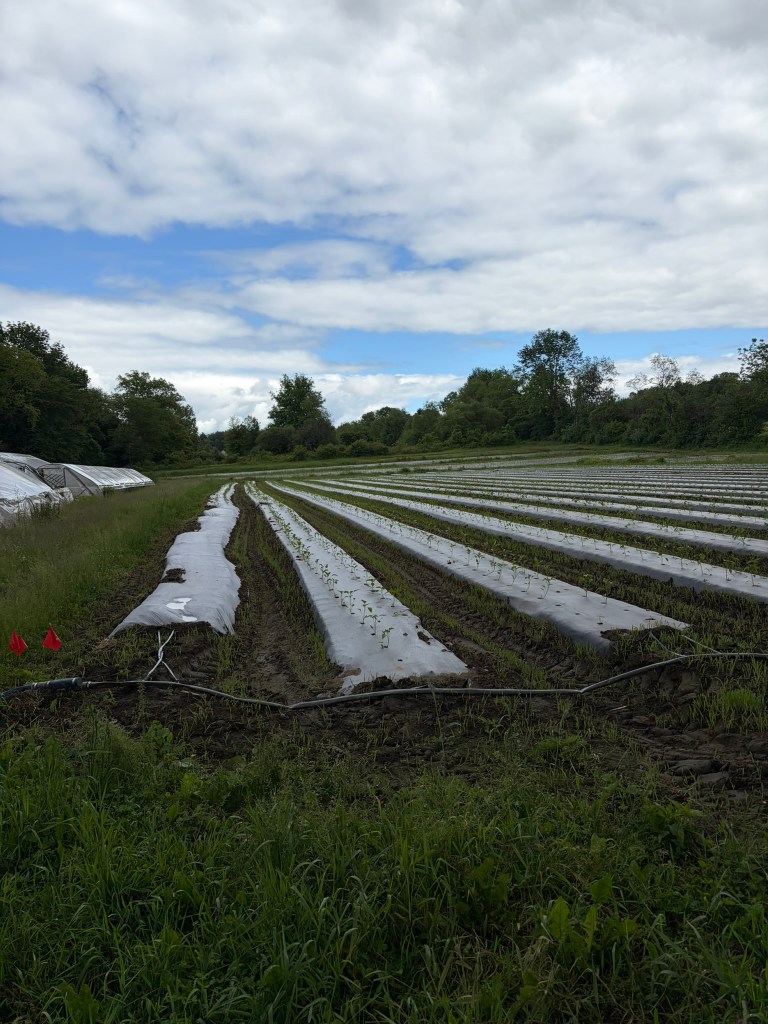
Kitchen Garden is also farming about 4 acres of tomatoes and peppers with drip irrigation and plastic mulch, on the fields just north of the large greenhouses.
Em Thomas from Little Bend Flower Farm in Sunderland is preparing to grow flowers on about 1/2 acre, just north of the large greenhouse on the west end of the farm.
And Plainville Farm from Hadley, will be growing squash on the fields at the east end of the farm, along Pine St.
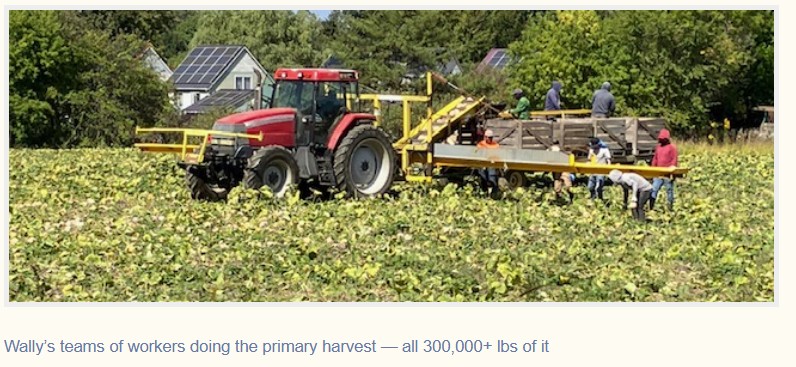
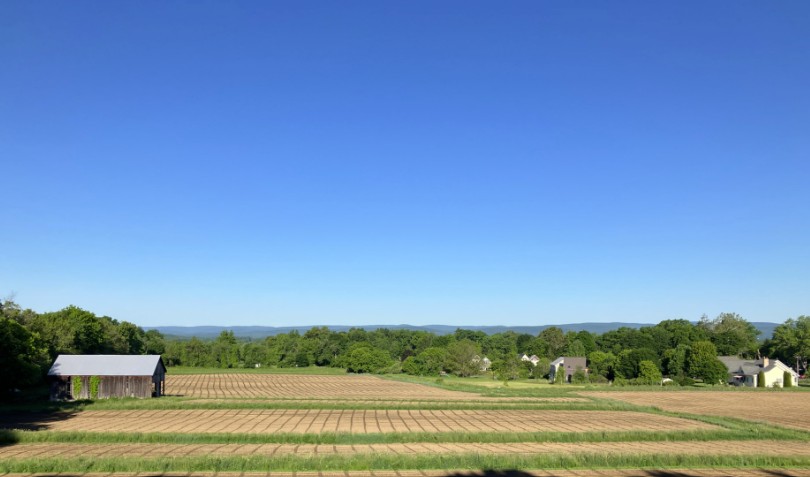
Planting of the organic squash along Pine Street has begun!
You are invited to a public meeting!
Following a public meeting at the North Amherst Library last fall, the North Amherst Community Farm Board continued to be in conversation with potential future farming operations and have had discussions about possible projects that would serve the North Amherst community. Among the most exciting projects are a community garden, a public orchard or food forest, and start-up (incubator) farming enterprises.
Before making decisions on any of these possibilities however, we have engaged the UMass Permaculture Design and Practice class from the Stockbridge School of Agriculture to help us think creatively about the future. NACF Board members have met with the students several times both in class and on the farm to discuss possibilities.
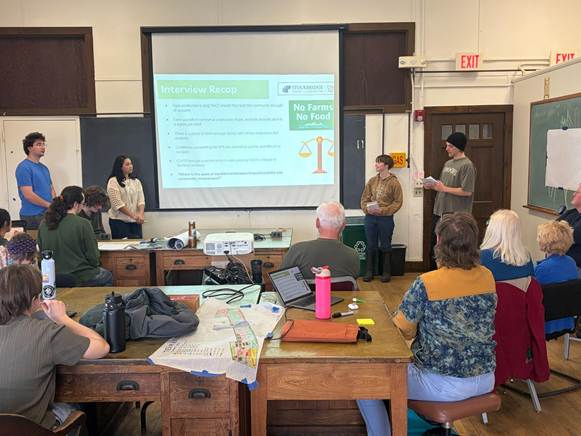
The UMass Permaculture Design Class will present the results of their analysis and proposed design for the farm to the NACF Board at a public event in May and you are invited!
Please join us for:

According to UMass faculty member, Lisa Depiano, “It is very meaningful for students to get a chance to work directly with their own clients on a real-life project alongside their peers. Our past clients have also found it helpful to have a focused time with students to help them think through their site goals, conduct a site analysis, and help them develop a master plan and other resources for their farm.”
We are as excited to hear their thinking as we are to hear your reaction to their presentation. This project continues to be a community effort, and as members of our local community, we still need your good ideas and suggestions. We hope you will join us for their final presentation on May 7.
——————————————–
Sowing seeds of support: Grow Food Northampton meets $1M goal to help local farms, fight hunger
| Original Post – Daily Hampshire Gazette | Published: 08-05-2025 3:41 PM Modified: 08-05-2025 5:41 PM |
By GRACE CHAI
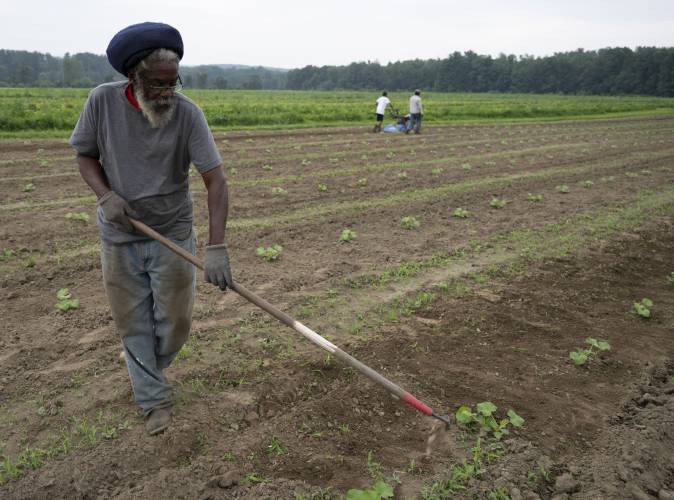
NORTHAMPTON — Leaning out of the window of his blue truck on a hot summer day last week, Courtney Whitely of Ras Farm recounted his journey to farming.
The Jamaica native had been a farmer for a long time working for other farms in the area before he obtained land to grow his own produce from Grow Food Northampton. To him, growing food requires a connection to the land, and understanding how to grow food that nourishes the body is important.
“You have to be one with the land,” Whitely said.
He learns a lot from the land, including when growing certain food doesn’t work out one season. Last year, he tried to plant kallaloo, a leafy green used in many Jamaican dishes, using plastic materials to support its growth, but it didn’t grow well. After planting it again differently this year, it thrived.
Now Whitely grows butternut squash, jalapenos and other vegetables to sell at Grow Food’s Tuesday Farmers Market. He found out about the Northampton nonprofit while browsing a website called New England Farmland Finder, where he discovered that the organization leases land to small farms.
Whitely is one of 10 farmers who have been able to lease land at affordable prices from Grow Food, the largest community farm in Massachusetts whose mission is to support local farms, provide land- and food-based education for children and adults, advocate for food security and practice sustainability.
The nonprofit’s role in the community began in 2010, when founders Lilly Lombard and Adele Franks — with the support of over 800 petition signatures from locals — lobbied for 121 acres in Florence to be preserved as farmland.
In the 15 years since its founding, Grow Food has established a community farm where it leases land to small farms, oversees a 320-plot community garden where people can grow their own food for an annual fee of $40 (or pay on a sliding scale), and operates a Giving Garden that grows thousands of pounds of food annually for donation to local food pantries and community meal sites. Grow Food also promotes education on local food and farming, runs a Tuesday Farmers Market and delivers free food to nine low-income housing sites each week.
This work has been bolstered along the way by a combination of funding sources, including the Northampton community and federal and state grants.
But as federal grants began to get wiped out under the Trump administration, Grow Food’s leaders saw the “writing on the wall,” as co-Executive Director Alisa Klein puts it, and last fall launched a campaign to raise more than $1 million for its Community Roots Fund. The campaign collected some $900,000 in private donations over the course of several months before opening to the public in June. Within six weeks, the organization raised the remaining $100,000.
Klein said that community members contributed with “remarkable generosity,” crediting the huge community response to people recognizing the role that Grow Food plays in feeding people in the city.
Klein says that while the organization had an “infusion of funds” for capital projects, its $1 million campaign is critical operational funding that will allow it to continue their programs and initiatives. The money will be used to support local farms and gardeners in the Community Garden and to implement climate resilience measures.
Some of these programs support its mission of education, as the organization has established a close relationship with Northampton Public Schools where students come to the community garden on an annual field trip.
“If we can engage kids in the local food system at a young age, if we can impart to them a sense of agency that they can create a healthy, vibrant, resilient local food system … they will go on to be kind of citizen activists to create that healthy local food system,” said Klein. “We feel like it’s really important to give them the tools to learn how to grow food, to have a relationship with the land.”
Grow Food also has classes on the community farm for adults to learn about farming and gardening. Klein says that the organization hones in on the cultural origins of different kinds of food and they talk about the history of the land.
Some of these programs will take place in a new pole barn, funded by a federal grant from U.S. Rep. Jim McGovern and a city grant from the Community Preservation Act, that Grow Food will use to host events, educational classes and more.
Recently, Grow Food held an event at its Living History garden, where food from different cultures grows alongside each other. Walking through the Living History garden feels like flipping through a richly diverse family album: covered in green leaves on a trellis are bumpy green bitter gourds; illuminated in bright sunlight are red okra, flax and molokhia, a leafy green used in many traditional Middle Eastern dishes. The garden represents the larger story of people hailing from all over the world who came to Northampton.
Impact of federal cuts
The organization relies on local generosity and private funding more than before to support these kinds of programs. According to Klein, Grow Food lost nearly one third of its budget due to federal funding cuts for grants such as the Local Food Purchase Assistance Cooperative Agreement Program (LFPA), which provided funding for groups like GFN that buy food from socially disadvantaged farmers and producers to provide to underserved communities.
Previously, the LFPA grant it received provided $400,000 over the course of three years. The nonprofit expected to renew the U.S. Department of Agriculture grant for another three years, but it was terminated in March.
Grow Food has also lost funding from a Farm to School grant that would have provided $50,000 for GFN’s education programs.
“We saw the writing on the wall, that we knew that hunger and food insecurity [were] rising in this valley,” said Klein. “And so we knew that we were at a moment where we had to figure out how to strengthen the organization’s ability to continue our work and to continue to feed people in the community.”
According to the Greater Boston Food Bank’s fifth statewide Food Access Report, food insecurity among Massachusetts households has increased to 37% in 2024 based on survey data. In the same report, Hampshire and Franklin counties were shown to be 50% food insecure and Hampden County as 54% food insecure, with food insecurity defined as “the experience of being unable to afford enough food to eat or worrying about where one’s next meal will come from.”
Role of farmers market
One way Grow Food combats food insecurity is through its Tuesday Farmers Market, which takes place behind Thornes Marketplace from April until November.
A popular community fixture, the market bustles with activity on a typical afternoon, with about 30 vendors selling produce and other goods to customers. Grow Food does Supplemental Nutrition Assistance Program (SNAP) matching at the market, doubling up to $10 of customers’ SNAP money. For every $10 spent in SNAP, for example, GFN gives someone $20 in tokens to buy anything SNAP eligible, like meat, cheese, fruits and vegetables. Massachusetts’ Healthy Incentives Program (HIP) is another program that helps SNAP recipients access free, local produce up to $40 per month and is also available at the farmers market.
Farmers market Manager Helen Kahn organizes the music, vendors and SNAP transactions. Standing under a tent that provided some respite from the blazing heat last week, Kahn helped marketgoers at the Grow Food table to the sound of a fan whirring.
“I think people don’t really realize how many food insecure families and individuals there are in this region,” said Kahn, who says that in the last four years, 30% of all purchases made at the market were made with SNAP. “I think [people] think Northampton and … erudite, privileged, wealthy. It’s not necessarily the case. It’s very important not only to have people able to use their SNAP and their healthy incentives program to buy fresh fruits and vegetables, but in addition to that, the SNAP match that we’re providing is helping people purchase even more.”
According to Kahn, the organization processes 120 to 160 transactions at its table every market. Between the farmers markets in the summer and the winter, Grow Food gives out $55,000 each year to food-insecure households. Kahn says that the program benefits both SNAP recipients and farmers.
Additionally, Grow Food takes the market on the road every week to reach more people through its mobile farmers market. Two teams of volunteers, each led by a food access assistant, split up to deliver free food like tomatoes, eggplants and greens from local farms to nine low-income housing sites. The market serves about 250 households each week, with people picking up food for their families, according to Erin Ferrentino, food access manager.
Several residents, including Robin Hicks, 63, visit the mobile market every week. Hicks, who lives at Cahill Apartments, is eight years sober from alcohol and heroin and now lives with her 10-year-old cat. The mobile market is part of her Thursday morning routine.
A few feet away from the table of produce, she pressed play on her phone, the tune of a song she calls “One Day at a Time” drifting into the air. She danced a little, humming the lyrics with a smile on her face. One day at a time — or ODAAT — is her motto.
“I love these people,” she said, looking toward the table of volunteers. “I am so very grateful to [Grow Food Northampton] for coming every week.”
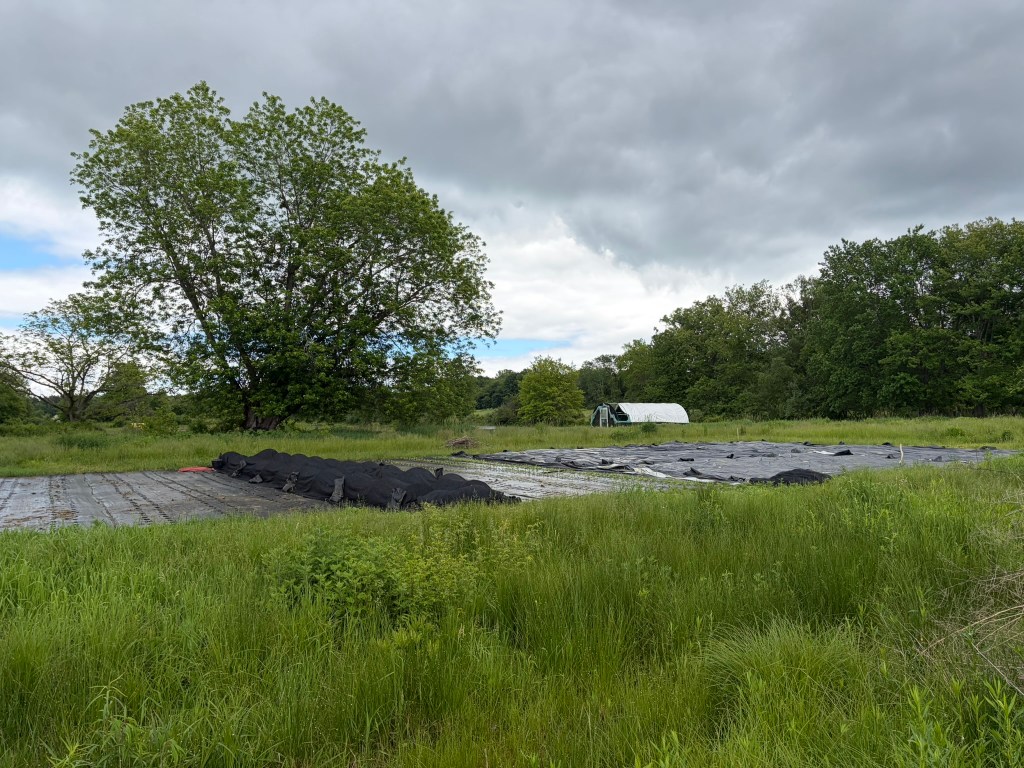
 Wally Czajkowski (at left) with Dave Tepfer on the farm as Dave and he review the terms of the sub-lease. Off from Wally’s shoulder (in the distance) you can see some of the composted goat manure that he will be spreading to accelerate the growth of his squash crop.Wally’s presence means that there will be productive activity on the land. That will be good for our morale, and it will also prevent the maturing and seeding of weed plants that would otherwise thrive in the fields. Wally has agreed to plant a winter cover crop before he leaves.


